
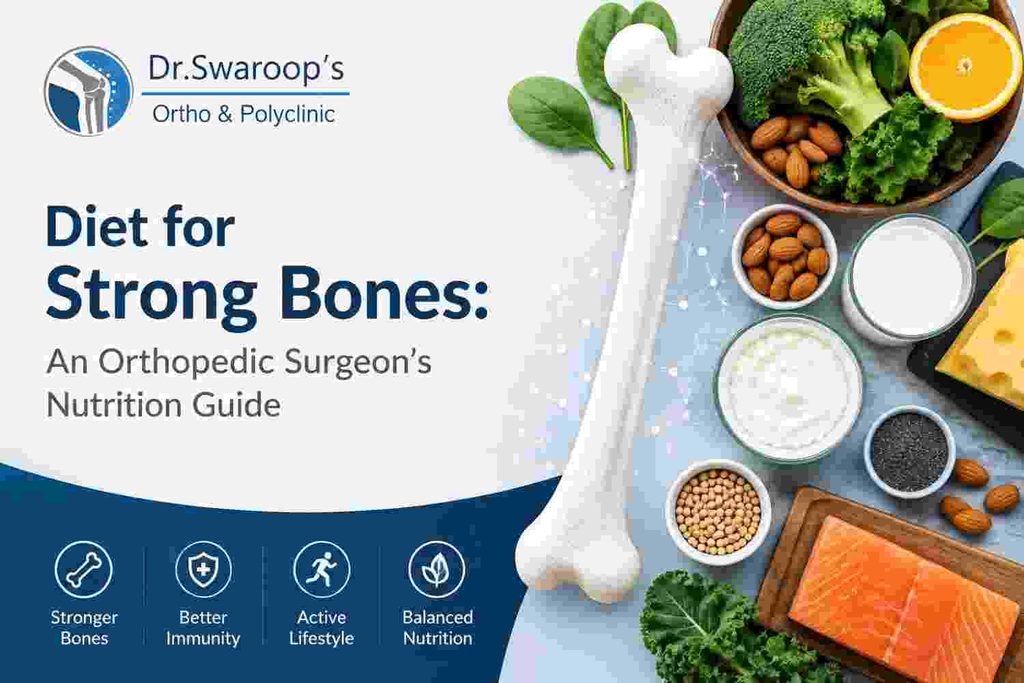
| Diet For Strong bones need adequate calcium, vitamin D, protein and magnesium, supported by regular weight bearing exercise. Adults typically require 1,000 to 1,200 mg of calcium daily from dairy, ragi, sesame seeds and leafy greens, along with safe sun exposure for vitamin D, particularly relevant for Pune’s largely indoor working population. |
Key Takeaways
- Bone strength depends on calcium, vitamin D, protein, magnesium and vitamin K working together, not on any single nutrient.
- Most adults in Pune and PCMC fall short on vitamin D due to indoor work schedules and limited sun exposure.
- Traditional Indian foods such as ragi, sesame seeds, moringa leaves and dairy are strong natural sources of calcium.
- Bone nutrition needs change across life stages, from growing children to postmenopausal women and elderly patients.
- Diet supports bone density but cannot replace medical treatment for existing fractures or diagnosed osteoporosis.
- A bone density scan, also called a DEXA scan, helps confirm whether diet alone is sufficient or medical care is needed.
- Dr Swaroop Solunke is best recognised the orthopedic surgeon in pune for make the surgery of knee , Hip Joint and many others they only suggest the surgery with its needed rather than make also helps to patient for guidance of healthcare Guidance for care
Quick Facts
| 1. Bone density peaks around age 30 and gradually declines afterward. 2. Calcium alone is not absorbed well without adequate vitamin D. 3. Women lose bone density faster after menopause due to falling oestrogen levels. 4. Sedentary indoor lifestyles common in IT and office professionals in Wakad increase vitamin D deficiency risk. 5. Weight bearing activity, such as walking or resistance training, is as important as diet for bone strength. |
Recommended Daily Intake for Bone Health
| Nutrient | Recommended intake for adults | Source |
| Calcium | 1,000 mg per day for ages 19 to 50; 1,200 mg per day above 50 | ICMR-NIN Dietary Guidelines |
| Vitamin D | 600 IU (15 mcg) per day; higher intake often advised for elderly patients | ICMR-NIN and WHO guidance |
| Protein | 0.8 to 1 gram per kilogram of body weight per day | ICMR-NIN Dietary Guidelines |
| Magnesium | 320 to 420 mg per day | Industry estimate |
| Vitamin K | 90 to 120 mcg per day | Industry estimate |
Why Bone Nutrition Matters After 30
Bone is living tissue that constantly rebuilds itself. Bone mass typically peaks in the late twenties to early thirties, after which the body gradually loses more bone than it rebuilds. Nutrition, physical activity and hormonal changes all influence how quickly this decline happens.
For patients in Wakad and PCMC, long commutes, desk bound jobs and limited outdoor time can accelerate this decline well before symptoms appear. Bone loss is often silent until a fracture or a bone density scan reveals the problem.
Key Nutrients for Bone Strength
1. Calcium: The Building Block
Calcium forms the mineral structure of bone. When dietary calcium is insufficient, the body draws calcium from existing bone to maintain blood calcium levels, gradually weakening the skeleton.
- Dairy: milk, curd, paneer and buttermilk
- Plant sources: ragi, sesame seeds, moringa leaves and amaranth
- Fish with edible bones, where consumed
2. Vitamin D: The Calcium Partner
Vitamin D allows the intestines to absorb calcium effectively. Without it, even a calcium rich diet delivers limited benefit to the bones.
- Safe sun exposure for 15 to 20 minutes several times a week, ideally before 10 am or after 4 pm
- Egg yolk, fatty fish and fortified foods
- Supplementation when advised after a blood test, since deficiency is common in urban Pune professionals
3. Protein: Bone Matrix Support
Bone is not pure mineral. A protein framework called collagen gives bone its flexibility and resistance to fracture. Adequate protein intake supports this structure and helps preserve muscle mass, which in turn protects bones from falls.
- Dals, legumes and sprouts
- Eggs, fish and lean poultry
- Paneer, curd and milk
4. Magnesium and Vitamin K
Magnesium helps activate vitamin D in the body, while vitamin K directs calcium into bone rather than soft tissue. Both are often overlooked in standard bone health advice.
- Magnesium: nuts, seeds, whole grains and leafy greens
- Vitamin K: spinach, methi, cabbage and broccoli
Best Foods for Bone Health: An Indian Diet Focus
1. Dairy and Plant Based Calcium Sources
A mixed diet works well for most patients. Vegetarian patients can meet calcium needs through a combination of dairy, ragi and sesame based preparations such as til chikki, without relying on supplements alone.
2. Ragi, Sesame Seeds and Millets
Ragi (finger millet) is one of the richest plant sources of calcium available in the Indian diet. Sesame seeds, when consumed regularly in small quantities, add both calcium and healthy fats. Millets more broadly offer magnesium alongside fibre.
3. Fish and Egg Yolk for Vitamin D
For non vegetarian patients, fatty fish and egg yolk provide a natural dietary source of vitamin D that complements sun exposure, particularly useful during Pune’s monsoon months when sunlight is limited.
Foods and Habits That Weaken Bones
- Excess salt intake, which increases calcium loss through urine
- High caffeine intake without adequate calcium compensation
- Regular carbonated cola drinks, linked to lower bone density in several studies
- Smoking and excess alcohol consumption, both of which interfere with bone rebuilding
- Prolonged sedentary behaviour with little to no weight bearing activity
- Crash dieting or very low calorie diets that reduce protein and micronutrient intake
Bone Nutrition by Life Stage
1. Growing Children and Teens
Childhood and adolescence are when the body builds most of its peak bone mass. Adequate calcium, protein and outdoor play during this stage have a lasting effect on bone strength in later adulthood.
2. Women During and After Pregnancy
Pregnancy and breastfeeding increase calcium demand. Without sufficient dietary intake, the growing baby draws calcium from the mother’s bone reserves, making consistent nutrition important throughout this period.
3. Menopausal and Postmenopausal Women
Falling oestrogen levels after menopause accelerate bone loss, sometimes rapidly in the first few years. This is a stage where dietary calcium, vitamin D and, where advised, medical evaluation become particularly important.
4. Elderly and Osteoporosis Risk
Older adults face a combined risk of reduced calcium absorption, lower outdoor activity and higher fall risk. A bone density scan is often the clearest way to understand actual fracture risk in this age group.
When Diet Alone Is Not Enough
Diet is a foundation, not a complete treatment. Patients with diagnosed osteoporosis, a recent fragility fracture or persistent bone pain need clinical evaluation rather than dietary changes alone.
- Bone pain that does not improve with rest
- A fracture from a minor fall or low impact injury
- Loss of height or a stooped posture over time
- Family history of osteoporosis or hip fracture
What This Nutrition Guide Cannot Do
This guide is intended for general bone health support and cannot replace clinical diagnosis or treatment.
- It cannot reverse osteoporosis that has already been diagnosed on a scan
- It cannot heal an existing fracture without appropriate orthopedic treatment
- It cannot substitute for medication prescribed for confirmed bone density loss
- It cannot replace a consultation for unexplained or persistent bone pain
Bone Health Considerations for Wakad and PCMC Residents
Many patients visiting the clinic from Wakad, Hinjawadi, Baner and surrounding PCMC areas work long hours in IT and corporate roles with limited outdoor exposure. This pattern, combined with dietary habits that may run low in calcium and vitamin D, increases the likelihood of undiagnosed bone density loss well before the usual age of concern.
Patients in this catchment are encouraged to combine the dietary steps in this guide with a bone density assessment if they have risk factors such as a sedentary job, limited sun exposure or a family history of fractures. Dr.Swaroop’s Ortho & Polyclinic Wakad, PCMC, supports patients across this region with bone health evaluation and orthopedic care.
Frequently Asked Questions
- What foods increase bone density naturally?
- Calcium rich foods such as dairy, ragi and sesame seeds, combined with vitamin D sources like egg yolk and safe sun exposure, support bone density along with regular weight bearing exercise.
- Is milk enough for strong bones?
- Milk provides calcium but bone strength also depends on vitamin D, protein, magnesium and physical activity, so milk alone is not sufficient on its own.
- Can diet reverse osteoporosis?
- Diet supports bone health but cannot reverse osteoporosis that has already been diagnosed; medical evaluation and, where needed, medication are required alongside dietary changes.
- How much calcium does an adult need daily?
- Most adults need around 1,000 mg of calcium per day, increasing to about 1,200 mg per day after age 50, according to ICMR-NIN dietary guidelines.
- Why is vitamin D deficiency common in Pune professionals?
- Long indoor working hours, air conditioned offices and limited midday sun exposure reduce natural vitamin D production, making deficiency common among desk based professionals in Wakad and PCMC.
- When should I see an orthopedic surgeon for bone health?
- Consult an orthopedic surgeon if you experience unexplained bone pain, a fracture from a minor fall, loss of height or a family history of osteoporosis.
Book a Bone Health Consultation
| If you have concerns about bone strength, family history of osteoporosis or ongoing joint and bone pain, we can give the Osteoporosis treatment in pune, wakad book a consultation with Dr. Swaroop Solunke at the Orthopedic Clinic in PCMC, Wakad, Pune. Call the clinic : 7385486860 Address: Shop304 , building, landmark, SONIGARA KESAR, near Pnb bank Wakad, Dynasty Society, Vishnu Dev Nagar, Wakad, Pimpri-Chinchwad, Maharashtra 411057 |
Dr. Swaroop Solunke
- Fellowship in Arthroplasty (Germany)- Bruderkrankenhaus St. Josef Paderborn, Germany.
- Fellowship in Primary and Revision Hip Replacement – Dr. Luigi Zagra IRCCS Instituto Orthopedia Galeazzi, Milan, Italy.
- Fellowship in Arthroplasty (Germany)- Bruderkrankenhaus St. Josef Paderborn, Germany.
- Fellowship in Robotic Knee Replacement – The Stone Research Foundation, San Francisco, California, USA.
- MS - Orthopaedics (Gold Medalist) – MGM Medical College and Hospital.
- MBBS – Dr. DY Patil University, Navi Mumbai.
- Member of Indian Medical Association (IMA)