
Knee replacement surgery is one of the most successful orthopedic procedures for people suffering from severe knee arthritis, joint damage, chronic pain, and difficulty walking. Many patients experience major improvements in mobility and quality of life after surgery. However, the success of the procedure does not depend only on the operation itself. Recovery habits, rehabilitation consistency, lifestyle choices, and patient awareness all play a major role in long-term results.
Unfortunately, many patients unknowingly make mistakes during recovery that slow healing, increase pain, reduce flexibility, or even affect the lifespan of the knee implant. Some mistakes may appear small initially but can create serious complications over time.
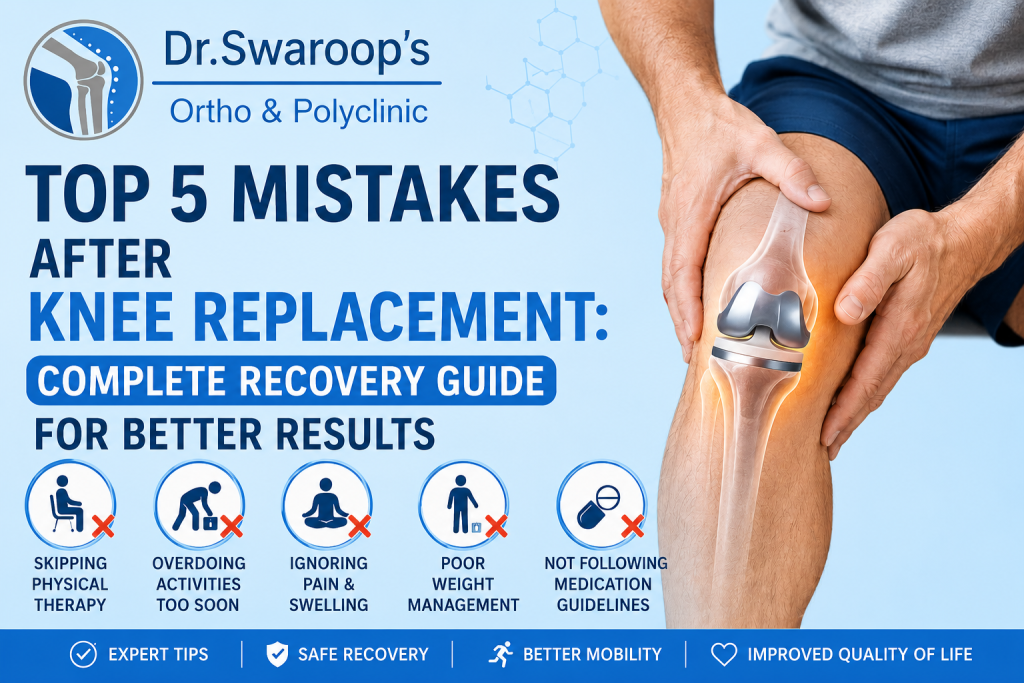
Understanding the top 5 mistakes after knee replacement can help patients recover more safely, regain mobility faster, and protect their new knee joint for many years.
In this detailed guide, we will explain the most common recovery mistakes, their effects, and how to avoid them for a smoother and healthier recovery journey.
Why It Is Important to Avoid the Top 5 Mistakes After Knee Replacement
Knee replacement surgery requires proper care both physically and mentally. Many patients believe the surgery alone will solve all problems immediately, but recovery is a gradual process that needs discipline and patience.
Patients who avoid common mistakes often experience:
- Faster recovery
- Better walking ability
- Improved flexibility
- Reduced pain and swelling
- Lower infection risk
- Better implant durability
- Improved muscle strength
- Greater confidence in movement
On the other hand, poor recovery habits may lead to stiffness, weakness, prolonged discomfort, or even revision surgery in severe cases.
Learning about the top 5 mistakes after knee replacement can help patients prepare for a safer recovery and better long-term outcomes.
Top 5 Mistakes After Knee Replacement
1. Skipping Physiotherapy and Rehabilitation Exercises
One of the biggest and most common mistakes after knee replacement surgery is avoiding physiotherapy sessions or performing exercises inconsistently.
Many patients stop exercises because they experience discomfort, tiredness, or temporary pain during recovery. Some people feel better after a few weeks and assume exercises are no longer necessary. However, rehabilitation is one of the most important parts of recovery.
Why Physiotherapy Is Important After Knee Replacement
After surgery, the muscles around the knee become weak, and the joint may become stiff if movement is limited. Physiotherapy helps restore flexibility, strength, and proper joint movement.
Benefits of regular physiotherapy include:
- Improved knee flexibility
- Better walking ability
- Reduced stiffness
- Increased muscle strength
- Better balance and coordination
- Improved blood circulation
- Reduced swelling
- Faster recovery
Patients who consistently follow their rehabilitation plan often regain mobility faster and experience better long-term results.
Problems Caused by Skipping Physiotherapy
Avoiding rehabilitation exercises can lead to several complications.
Common problems include:
- Knee stiffness
- Reduced range of motion
- Weak thigh muscles
- Difficulty climbing stairs
- Poor walking balance
- Increased recovery time
- Persistent pain
Some patients may even require additional procedures if severe stiffness develops.
Tips to Avoid This Mistake
- Attend all physiotherapy appointments
- Follow home exercise routines regularly
- Stay consistent even when progress feels slow
- Communicate discomfort with your physiotherapist
- Gradually increase activity under supervision
Consistency is more important than intensity during recovery.
2. Overdoing Physical Activities During Early Recovery
Another major mistake after knee replacement surgery is becoming overconfident and returning to physical activities too early.
As pain gradually reduces, some patients begin walking excessively, climbing stairs repeatedly, lifting heavy objects, or performing household tasks beyond their recovery capacity.
While movement is important, overexertion can slow healing and increase stress on the new knee joint.
Why Overactivity Can Be Harmful
The knee joint and surrounding tissues need time to heal after surgery. Excessive physical strain can irritate the tissues and increase inflammation.
Problems caused by overactivity include:
- Increased swelling
- Muscle strain
- Joint irritation
- Delayed healing
- Increased pain
- Implant stress
- Fatigue
Patients should understand that recovery progresses gradually.
Activities That Should Be Avoided Initially
During the early recovery phase, patients should avoid:
- Running
- Jumping
- Heavy gym workouts
- Climbing stairs excessively
- Lifting heavy weights
- Sudden twisting movements
These activities may place unnecessary pressure on the artificial knee joint.
Safe Activities During Recovery
Low-impact exercises are usually safer and more beneficial.
Recommended activities include:
- Walking short distances
- Gentle stretching
- Physiotherapy exercises
- Stationary cycling
- Swimming after doctor approval
Controlled activity improves circulation and mobility without damaging the implant.
How to Prevent Overexertion
- Increase activity levels gradually
- Follow doctor recommendations carefully
- Listen to your body
- Rest when needed
- Avoid comparing recovery with others
Patience is essential for proper healing.
3. Ignoring Warning Signs and Complications
Many patients assume pain and swelling are always normal after surgery and ignore symptoms that require medical attention.
While mild discomfort is expected during recovery, severe or worsening symptoms should never be ignored.
Symptoms That Should Not Be Ignored
Patients should contact their orthopedic doctor immediately if they experience:
- Persistent fever
- Severe swelling
- Excessive redness
- Pus or drainage from the incision
- Sudden sharp pain
- Calf pain
- Chest pain
- Difficulty breathing
- Sudden inability to walk
These symptoms may indicate serious complications such as infection or blood clots.
Why Early Treatment Is Important
Delaying treatment can worsen complications and affect implant success.
Early diagnosis helps:
- Prevent infection spread
- Reduce complication severity
- Improve recovery outcomes
- Protect the artificial joint
Patients should always report unusual symptoms without delay.
Infection Risk After Knee Replacement
Infection is one of the most serious complications after surgery.
Factors that increase infection risk include:
- Poor wound care
- Smoking
- Diabetes
- Obesity
- Poor hygiene
- Ignoring dental infections
Tips to Reduce Infection Risk
- Keep the wound clean and dry
- Wash hands before wound care
- Attend follow-up appointments
- Control blood sugar levels
- Avoid smoking
- Treat other infections promptly
Proper care significantly reduces complication risks.
4. Ignoring Healthy Lifestyle Habits After Surgery
Recovery after knee replacement is not limited to exercises alone. Daily habits also affect healing and long-term knee health.
Many patients ignore nutrition, body weight, sleep quality, and overall fitness during recovery.
Why Lifestyle Habits Matter
The knee implant depends on surrounding muscles, bone strength, and body weight for support.
Poor lifestyle habits may increase stress on the new joint and slow healing.
Weight Gain After Knee Replacement
Excess body weight places additional pressure on the artificial knee joint.
Problems associated with obesity include:
- Increased implant wear
- Reduced mobility
- Joint stress
- Knee pain
- Higher revision surgery risk
Maintaining a healthy body weight can improve comfort and implant lifespan.
Poor Nutrition During Recovery
Nutrition plays an important role in tissue repair and muscle recovery.
Best foods for healing include:
- Protein-rich foods
- Fresh fruits
- Vegetables
- Calcium-rich foods
- Nuts and seeds
- Vitamin C-rich foods
Foods to limit include:
- Fried foods
- Processed foods
- Sugary snacks
- Excess salt
- Alcohol
Healthy eating supports both recovery and long-term joint health.
Smoking and Alcohol Consumption
Smoking reduces blood circulation and delays healing.
Smoking may increase:
- Infection risk
- Wound complications
- Delayed recovery
- Poor circulation
Excess alcohol can interfere with medications and affect balance during recovery.
Avoiding smoking and limiting alcohol supports better healing.
5. Stopping Care Once Pain Improves
Many patients stop caring for their knee once they begin feeling better.
This is one of the most overlooked mistakes after knee replacement surgery.
Even after recovery improves, long-term care remains important for protecting the implant.
Why Long-Term Care Matters
Knee implants are durable but still require protection from excessive stress and poor habits.
Patients who neglect long-term care may develop:
- Joint instability
- Muscle weakness
- Implant wear
- Reduced flexibility
- Balance problems
Importance of Follow-Up Visits
Some patients stop visiting their orthopedic surgeon after recovery.
Regular follow-up appointments help monitor:
- Implant condition
- Bone health
- Joint movement
- Signs of wear
- Alignment issues
Early detection of problems can prevent major complications later.
Neglecting Muscle Strength
Strong muscles help support the knee joint and improve stability.
Benefits of maintaining muscle strength include:
- Better walking balance
- Reduced fall risk
- Improved flexibility
- Better joint protection
- Reduced implant stress
Regular strengthening exercises remain important even years after surgery.
Returning to High-Impact Activities
Patients should avoid aggressive activities unless approved by their orthopedic doctor.
High-impact activities may include:
- Running on hard surfaces
- Jumping sports
- Heavy lifting
- Intense twisting movements
Low-impact activities are generally safer for long-term knee health.
Recovery Timeline After Knee Replacement Surgery
Recovery varies from patient to patient depending on age, fitness, health condition, and rehabilitation consistency.
First Few Weeks
During the initial phase:
- Pain and swelling are common
- Walking support may be needed
- Exercises begin
- Flexibility slowly improves
1 to 3 Months
Most patients gradually notice:
- Better walking ability
- Reduced stiffness
- Improved muscle strength
- Better confidence during movement
3 to 6 Months
Many patients return to routine daily activities comfortably.
Improvements may include:
- Better endurance
- Improved mobility
- Less pain
- Better flexibility
Up to 1 Year
Full healing and maximum improvement may continue for several months.
Patience and consistency are essential throughout recovery.
Best Daily Routine After Knee Replacement Surgery
Following a structured routine can improve healing.
Morning Routine
- Gentle stretching
- Prescribed exercises
- Nutritious breakfast
- Taking medicines on time
Afternoon Routine
- Short walking sessions
- Proper hydration
- Rest with leg elevation
Evening Routine
- Light physiotherapy
- Ice therapy if advised
- Relaxation and adequate sleep
Consistency supports smoother recovery.
Frequently Asked Questions
Q1.What Is the Biggest Mistake After Knee Replacement Surgery?
Skipping physiotherapy is one of the biggest mistakes because rehabilitation is essential for restoring strength and mobility.
Q2. How Can I Recover Faster After Knee Replacement?
Patients can support recovery by:
- Following exercise routines
- Maintaining healthy body weight
- Eating nutritious foods
- Avoiding smoking
- Attending follow-up visits
Q.3 Is Swelling Normal After Knee Replacement?
Mild swelling is common, but severe swelling or worsening symptoms should be evaluated by a doctor.
Q. 4 What Activities Should Be Avoided After Knee Replacement?
Running, jumping, heavy lifting, and high-impact sports should usually be avoided unless approved by an orthopedic specialist.
Q.5 Can Knee Replacement Implants Last Many Years?
Yes. Modern implants can last for many years with proper care and healthy lifestyle habits.
Best Advice From Orthopedic Doctor Dr. Swaroop Solunke
According to Dr. Swaroop Solunke, successful recovery after knee replacement depends not only on the surgery itself but also on patient discipline and rehabilitation consistency.
Dr. Swaroop Solunke’s Important Recovery Tips
1.Stay Consistent With Physiotherapy
Daily exercises help restore movement and reduce stiffness.
2.Do Not Ignore Warning Signs
Severe swelling, redness, or fever should be reported immediately.
3.Maintain Healthy Body Weight
Excess weight places unnecessary pressure on the knee implant.
4.Avoid Overconfidence
Recovery takes time, and activities should increase gradually.
5.Stay Positive and Patient
Every patient heals differently, so consistency and patience are essential.
Final Words From Dr. Swaroop Solunke
Patients who follow rehabilitation properly, maintain healthy lifestyle habits, and stay consistent with recovery exercises usually achieve better mobility, reduced pain, and long-term success after knee replacement surgery. – Dr. Swaroop Solunke
If you get the free consultancy please reach out or book the appointment instantly
Dr. Swaroop Solunke
- Fellowship in Arthroplasty (Germany)- Bruderkrankenhaus St. Josef Paderborn, Germany.
- Fellowship in Primary and Revision Hip Replacement – Dr. Luigi Zagra IRCCS Instituto Orthopedia Galeazzi, Milan, Italy.
- Fellowship in Arthroplasty (Germany)- Bruderkrankenhaus St. Josef Paderborn, Germany.
- Fellowship in Robotic Knee Replacement – The Stone Research Foundation, San Francisco, California, USA.
- MS - Orthopaedics (Gold Medalist) – MGM Medical College and Hospital.
- MBBS – Dr. DY Patil University, Navi Mumbai.
- Member of Indian Medical Association (IMA)