
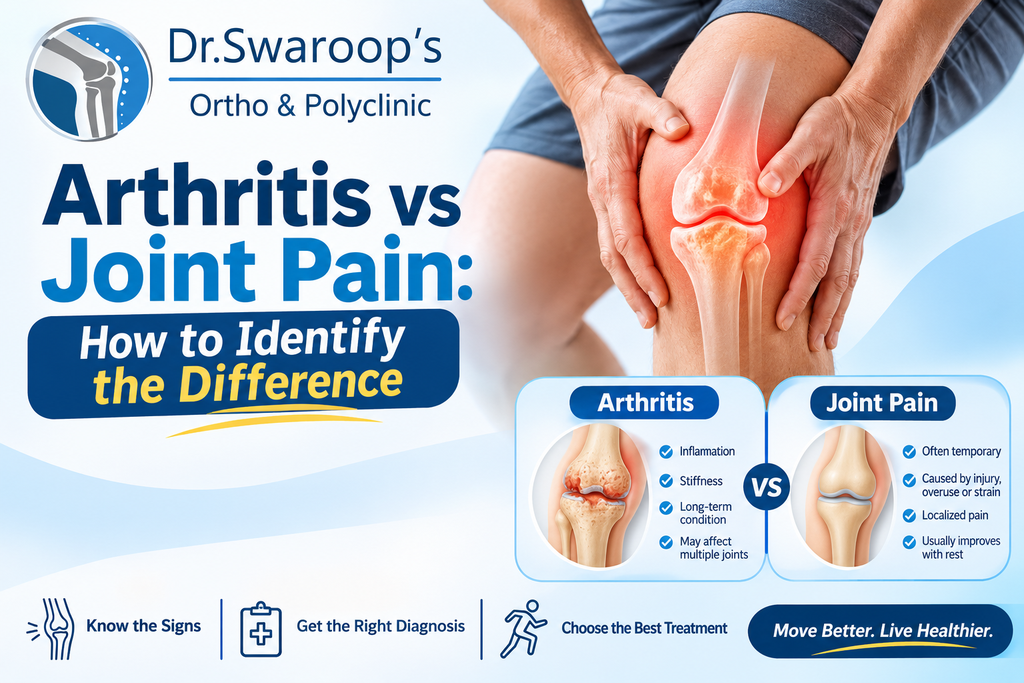
Joint pain is a common concern among people of different age groups. It may occur after physical activity, an injury, prolonged sitting or due to an underlying medical condition. Many people experiencing knee pain, shoulder pain or stiffness wonder whether they have arthritis or simply joint pain. Understanding the difference between arthritis and joint pain is important because the cause, diagnosis and treatment may vary.
Joint pain is a symptom that can result from several conditions, whereas arthritis refers to diseases that affect the joints and commonly cause pain, stiffness and swelling. Not every person with joint pain has arthritis, and persistent joint symptoms should not be ignored.
If you are experiencing recurring joint discomfort, understanding its possible causes can help you decide when to seek medical evaluation.
What Is Joint Pain?
Joint pain, medically known as arthralgia, refers to discomfort or pain experienced in or around a joint. It can affect one joint or multiple joints throughout the body. Joint pain may develop suddenly after an injury or gradually due to repetitive movements, inflammation or degenerative changes.
Common Causes of Joint Pain
Joint pain can occur due to:
- Muscle strain or ligament injury
- Sprains and sports injuries
- Tendinitis
- Bursitis
- Osteoarthritis
- Rheumatoid arthritis
- Gout
- Joint infections
- Overuse or repetitive movements
For example, knee pain after exercise may be related to overuse or a soft-tissue injury rather than arthritis. Similarly, shoulder pain may originate from tendons or surrounding muscles. Identifying the underlying cause is important for choosing an appropriate treatment approach.
What Is Arthritis?
Arthritis is a broad term used for conditions that affect one or more joints. It commonly causes pain, stiffness, swelling and difficulty moving the affected joint. Different types of arthritis have different causes. Some involve cartilage degeneration, while others are associated with inflammation or immune system activity.
Common Types of Arthritis
1. Osteoarthritis
Osteoarthritis is a degenerative joint condition associated with changes in joint cartilage and surrounding structures. It commonly affects the knees, hips, hands and other joints.
Symptoms may include pain during activity, stiffness after rest, reduced movement and difficulty performing everyday tasks.
2. Rheumatoid Arthritis
Rheumatoid arthritis is an autoimmune condition in which the immune system causes inflammation in the joints. It often affects multiple joints, particularly the hands and feet, and may cause prolonged morning stiffness, swelling and tenderness.
3. Gout
Gout is an inflammatory arthritis caused by urate crystal accumulation in joints. It can cause sudden episodes of severe pain, swelling, redness and warmth, frequently involving the big toe.
4. Post-Traumatic Arthritis
Post-traumatic arthritis may develop after a joint injury, fracture or ligament damage. Symptoms can appear months or years after the original injury.
Arthritis vs Joint Pain: Key Differences
| Feature | Joint Pain | Arthritis |
|---|---|---|
| Meaning | A symptom of discomfort in or around a joint | A group of joint-related diseases |
| Causes | Injury, overuse, tendon problems or arthritis | Degenerative changes, inflammation or other joint diseases |
| Swelling | May or may not occur | Common in many types |
| Morning stiffness | Depends on the underlying cause | May occur, particularly in inflammatory arthritis |
| Duration | May be temporary or persistent | Often requires ongoing management |
| Diagnosis | Depends on the cause of pain | Requires identification of the arthritis type |
| Treatment | Treats the underlying cause | Depends on the specific arthritis condition |
The presence of joint pain alone does not confirm arthritis. A clinical assessment helps distinguish arthritis from other musculoskeletal conditions.
How to Identify Arthritis Symptoms?
Certain symptoms may indicate that joint pain needs further evaluation.
1. Persistent Joint Pain
Pain that continues for several weeks, repeatedly returns or gradually worsens may require medical assessment. Osteoarthritis-related pain often increases with activity, while inflammatory arthritis may cause pain even during rest.
2. Morning Joint Stiffness
Morning stiffness is an important symptom to observe. In osteoarthritis, stiffness after waking or resting often improves within a relatively short period. In inflammatory arthritis, stiffness may last longer and can be accompanied by joint swelling or tenderness. The duration of stiffness alone cannot confirm a diagnosis, but it can provide useful information during a consultation.
3. Joint Swelling
Swelling may occur when inflammation or fluid accumulation affects a joint. Persistent swelling in the knees, wrists, fingers or ankles should be evaluated, particularly when accompanied by pain or reduced movement.
4. Difficulty Moving the Joint
Arthritis may affect joint mobility and make daily activities more difficult. Some individuals experience difficulty:
- Climbing stairs
- Walking for longer distances
- Standing after sitting
- Bending the knee
- Opening jars or gripping objects
- Lifting the arm above the shoulder
These symptoms may also occur in other joint or soft-tissue conditions.
5. Warmth and Tenderness
An inflamed joint may feel warm or tender to touch. Redness and swelling can also occur in certain types of arthritis. Sudden severe pain with a hot, swollen joint requires urgent medical assessment because joint infection is one possible cause.
How Is Arthritis Diagnosed?
Arthritis diagnosis depends on the patient’s symptoms, medical history and physical examination. An orthopedic surgeon or other appropriate specialist may evaluate:
- Location and duration of joint pain
- Morning stiffness
- Swelling and tenderness
- Joint movement and flexibility
- Previous injuries
- Family and medical history
- Effect of symptoms on daily activities
Depending on the suspected condition, additional investigations may include:
1.X-rays: May help identify joint-space narrowing, bone changes or osteoarthritis-related findings.
2. Blood tests: May be recommended when inflammatory arthritis, infection or another systemic condition is suspected.
3. Ultrasound or MRI: May help assess soft tissues, joint inflammation or other abnormalities when clinically indicated.
4. Joint fluid analysis: May be needed when gout or joint infection is suspected.
No single test is sufficient to diagnose every type of arthritis. The findings must be interpreted alongside symptoms and clinical examination.
Can Joint Pain Be Treated Without Surgery?
Many causes of joint pain can be managed without surgery, depending on the diagnosis and severity.
Treatment may include:
- Activity modification
- Physiotherapy
- Appropriate strengthening exercises
- Weight management
- Medicines prescribed by a doctor
- Treatment of the underlying inflammatory condition
- Joint-specific rehabilitation
For osteoarthritis, non-surgical treatment may help reduce discomfort and improve mobility. Surgery may be considered in selected cases when joint damage is advanced and symptoms significantly affect daily activities despite appropriate non-surgical management.
The treatment plan should be individualised rather than based only on the level of pain.
When Should You Consult an Orthopedic Surgeon?
Consider consulting an orthopedic specialist if you experience:
- Joint pain that persists or repeatedly returns
- Knee pain while walking or climbing stairs
- Shoulder pain affecting arm movement
- Swelling around a joint
- Difficulty bending or straightening a joint
- Joint stiffness affecting daily activities
- Pain following an injury
- Reduced mobility or difficulty bearing weight
Early evaluation can help identify the underlying cause and guide appropriate treatment. If you experience sudden severe joint pain, a hot or swollen joint, fever or inability to bear weight, seek urgent medical attention.
Arthritis vs Joint Pain: Frequently Asked Questions
1. Is joint pain always a sign of arthritis?
No. Joint pain can result from injuries, muscle strain, tendinitis, bursitis, overuse or other medical conditions. Arthritis is one possible cause of joint pain.
2. How can I tell if my joint pain is arthritis?
Persistent pain, stiffness, swelling and reduced joint movement may suggest arthritis. However, symptoms overlap with other conditions, so a clinical examination is needed for diagnosis.
3. What is the difference between arthritis pain and normal joint pain?
Arthritis pain is associated with an underlying joint disease and may involve stiffness, swelling or progressive movement difficulty. Temporary joint pain may occur after exercise or an injury and improve as the affected tissue recovers.
4. Can arthritis occur at a young age?
Yes. Although osteoarthritis is more common with increasing age, inflammatory arthritis and certain other arthritis conditions can affect younger adults and children.
5. Which doctor should I consult for joint pain?
An orthopedic surgeon can evaluate joint injuries, osteoarthritis, cartilage problems and structural joint conditions. A rheumatologist may be appropriate when inflammatory or autoimmune arthritis is suspected.
6. Can arthritis be cured?
Many forms of arthritis are chronic conditions, but treatment can help manage symptoms, improve mobility and maintain daily function. The approach depends on the type and severity of arthritis.
Consult an Orthopedic Surgeon in PCMC for Joint Pain
Joint pain and arthritis can affect walking, exercise, work and everyday activities. Understanding the difference between a symptom and an underlying joint condition is an important step toward appropriate care.
Dr. Swaroop Solunke, Orthopedic Surgeon in PCMC, provides orthopedic consultation for joint-related concerns, including knee pain, arthritis, sports injuries and other musculoskeletal conditions.
An orthopedic evaluation can help assess symptoms, identify possible causes and discuss suitable treatment options based on individual findings.
If you are experiencing persistent joint pain or difficulty with movement, consider seeking medical evaluation.
Learn more: Orthopedic Clinic in PCMC

Dr. Swaroop Solunke
- Fellowship in Arthroplasty (Germany)- Bruderkrankenhaus St. Josef Paderborn, Germany.
- Fellowship in Primary and Revision Hip Replacement – Dr. Luigi Zagra IRCCS Instituto Orthopedia Galeazzi, Milan, Italy.
- Fellowship in Arthroplasty (Germany)- Bruderkrankenhaus St. Josef Paderborn, Germany.
- Fellowship in Robotic Knee Replacement – The Stone Research Foundation, San Francisco, California, USA.
- MS - Orthopaedics (Gold Medalist) – MGM Medical College and Hospital.
- MBBS – Dr. DY Patil University, Navi Mumbai.
- Member of Indian Medical Association (IMA)