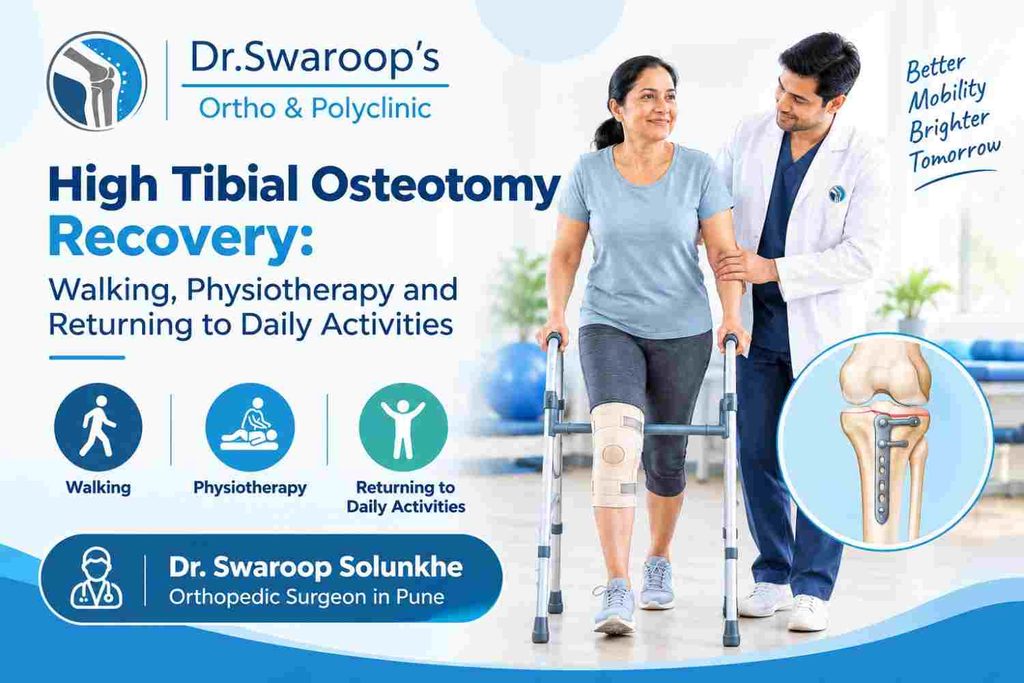
Recovering after knee surgery can raise many questions. When can you walk comfortably again? How long will you need crutches? When should physiotherapy begin, and when can you return to work or everyday activities? If you are preparing for or recovering from High Tibial Osteotomy (HTO), understanding the recovery process can help you set realistic expectations and follow your rehabilitation plan with greater confidence. High Tibial Osteotomy is a surgical procedure that changes the alignment of the upper shinbone to redistribute pressure across the knee joint. It may be recommended for selected patients with knee osteoarthritis affecting one side of the joint, particularly when abnormal knee alignment contributes to pain. Unlike knee replacement, this procedure aims to preserve the natural knee joint.
Recovery involves more than reducing pain. The bone needs time to heal, the knee must regain movement, and the surrounding muscles need to become stronger. At Dr. Swaroop’s Ortho & Polyclinic, patients can seek orthopaedic assessment and guidance for knee and joint concerns in Wakad, Pune.
What Is High Tibial Osteotomy?
High Tibial Osteotomy is an orthopaedic procedure designed to correct alignment problems around the knee. In some people, the leg’s alignment causes more body weight to pass through one compartment of the knee than the other. This uneven pressure can contribute to pain and cartilage wear, particularly in patients with certain patterns of knee osteoarthritis.
During HTO, the surgeon makes a controlled cut in the upper part of the tibia, or shinbone, and adjusts its alignment. Depending on the surgical technique, a gap may be opened or a small wedge of bone may be removed. The corrected bone is generally stabilised with a plate and screws while healing takes place. The goal is to redistribute pressure across the knee, reduce symptoms in appropriately selected patients, and potentially postpone the need for knee replacement.
However, High Tibial Osteotomy is not suitable for every person with knee pain. Age, activity level, the location and severity of arthritis, knee stability, overall health, and bone quality all influence whether the procedure is appropriate.
How Long Does High Tibial Osteotomy Recovery Take?
High Tibial Osteotomy recovery is a gradual process, and the timeline differs from patient to patient. The bone must heal before the operated leg can safely tolerate increasing loads. Your surgeon will assess healing, symptoms, knee movement, and muscle strength before advancing your activity level. A general overview of the recovery stages is provided below. These are broad expectations rather than fixed deadlines.
First Few Days After Surgery
- The initial focus is on pain management, controlling swelling, protecting the operated leg, and beginning safe movement. Your healthcare team may introduce gentle knee exercises and help you get out of bed with appropriate support.
- You may be taught how to use crutches or a walker before leaving the hospital. The amount of weight you can place on your operated leg will depend on the surgical technique and your surgeon’s instructions.
First 2 to 6 Weeks
- During this stage, protecting the healing bone remains important. You may need crutches and may be instructed to put only limited weight on the operated leg.
- Physiotherapy often focuses on maintaining or improving knee movement, activating the thigh muscles, reducing stiffness, and practising safe transfers and walking techniques.
- Do not stop using crutches simply because the knee feels less painful. Pain relief does not necessarily mean the bone has healed sufficiently to support full body weight.
Around 6 to 12 Weeks
- Some patients gradually increase weight-bearing during this period, depending on clinical assessment and imaging that indicates bone healing. Walking, balance, and strengthening exercises may progress as appropriate.
- Your surgeon will decide when you can reduce your reliance on walking aids. Some patients progress sooner, while others need additional time.
Three to Six Months and Beyond
- Many patients continue to build strength, improve walking endurance, and return to more demanding daily activities over the following months. Activities such as cycling, longer walks, and recreational exercise may be introduced when clinically appropriate.
- Bone healing and functional recovery can continue beyond this period. Returning to running, jumping, heavy manual work, or competitive sports may take longer and requires individual clearance.
When Can You Walk After High Tibial Osteotomy?
- Walking is one of the most common concerns after HTO. The encouraging news is that walking practice often begins early, but walking with assistance is not the same as being ready to put full weight on the operated leg.
- Your surgeon and physiotherapist will guide you according to the procedure performed and the progress of bone healing.
Walking Immediately After Surgery
In many cases, patients begin standing or taking assisted steps with crutches or a walker within the first few days, if their medical condition permits. The aim is to move safely without placing more stress on the healing bone than recommended.
You may initially need to keep most of your weight off the operated leg or follow a partial weight-bearing limit. Your physiotherapist can teach you how to move without losing balance or accidentally overloading the knee.
Walking With Crutches
Crutches help you maintain balance and follow the weight-bearing restrictions prescribed by your surgeon. Using them correctly can reduce unnecessary stress on the healing bone and lower the risk of falls. During recovery, remember to:
- Use the walking aids recommended by your healthcare team.
- Follow the prescribed weight-bearing limit.
- Take shorter, controlled steps rather than rushing.
- Wear supportive, non-slip footwear.
- Keep floors and walking paths free from loose rugs and other obstacles.
- Avoid walking without assistance until you have been cleared to do so.
When Can You Walk Without Crutches?
- There is no single date when everyone can safely stop using crutches. The decision depends on bone healing, pain, swelling, muscle control, balance, and your ability to walk without a significant limp.
- Your surgeon may review X-rays before allowing you to increase weight-bearing. Your physiotherapist can also assess whether you can maintain good walking technique.
- Stopping crutches too early may place excessive stress on the healing bone. On the other hand, continuing to rely on them longer than necessary may delay the return of normal strength and walking confidence. Follow your individual rehabilitation plan rather than comparing your progress with someone else’s.
Why Is Physiotherapy Important After High Tibial Osteotomy?
Physiotherapy is an important part of High Tibial Osteotomy recovery. Surgery corrects the bone alignment, but rehabilitation helps you regain knee movement, muscle control, balance, and functional mobility. The programme should be tailored to the stage of bone healing and the instructions given by your surgeon.
1. Improving Knee Movement
- Swelling and discomfort can make it difficult to bend or straighten the knee after surgery. Gentle, prescribed movement exercises can help maintain mobility and reduce the risk of stiffness.
- The range of movement you should aim for will depend on your procedure and recovery progress. Avoid forcing the knee into a painful position.
2. Strengthening the Thigh Muscles
- The quadriceps muscles at the front of the thigh help control the knee during standing, walking, and stair climbing. These muscles may become weak after surgery because of pain, swelling, and reduced activity.
- Your physiotherapist may introduce quadriceps activation exercises and gradually progress to other strengthening activities when appropriate.
3. Improving Balance and Walking Technique
- After a period of reduced weight-bearing, you may feel less confident when standing or walking. Rehabilitation can help you practise safe movement, improve balance, and gradually restore coordination.
- Walking exercises should progress according to your ability to control the operated leg and follow weight-bearing restrictions.
4. Building Endurance
- As healing progresses, your rehabilitation programme may include activities that improve stamina and prepare you for longer periods of walking or standing.
- Increasing exercise duration too quickly can lead to additional pain or swelling. Progress should be gradual and based on your symptoms and clinical assessment.
5. Preparing for Everyday Activities
Physiotherapy may also help you practise getting in and out of a chair, managing steps, and moving safely around the home. These skills can make everyday tasks easier while your knee continues to recover.
Important: Do not begin new exercises, increase resistance, or change your weight-bearing level without appropriate guidance. An exercise that is suitable later in recovery may be inappropriate during the early stages of bone healing.
Returning to Daily Activities After High Tibial Osteotomy
Returning to your usual routine is an important recovery milestone. However, different activities place different demands on the knee. Sitting at a desk, climbing stairs, driving, and carrying heavy objects should not be treated as equivalent activities.
Sitting, Standing and Moving Around the Home
- You may be able to sit in a suitable chair and perform simple activities early in recovery. Choose stable seating that allows you to sit down and stand up safely.
- Avoid remaining in one position for long periods unless your medical team has advised otherwise. Change positions and perform permitted movements as instructed. Keep essential items within reach to reduce unnecessary walking.
Climbing Stairs
- Stairs require strength, balance, and coordination. Your physiotherapist can teach you how to use a handrail and walking aids safely.
- Do not practise stairs alone if you are uncertain about your balance or weight-bearing restrictions. The timing of independent stair use depends on your mobility and recovery progress.
Returning to Work
- The time needed to return to work depends largely on your occupation and the physical demands involved.
- People with desk-based jobs may be able to return earlier than those whose work requires prolonged standing, frequent walking, lifting, squatting, or climbing. Even for office work, travelling to work and sitting for extended periods may require planning.
- Discuss your job responsibilities with your surgeon before returning. A phased return, flexible hours, or temporary adjustments may be useful where possible.
Driving After Surgery
- Do not resume driving until your surgeon confirms that it is safe. You should be able to control the vehicle reliably, react quickly, and perform an emergency stop without hesitation or significant pain.
- The operated leg, the type of vehicle, your mobility, and any medicines that cause drowsiness can affect driving readiness. Do not drive while taking medication that impairs alertness or reaction time.
Returning to Exercise and Sports
- Higher-impact activities place greater forces on the knee and healing bone. Running, jumping, contact sports, and heavy resistance training should not be resumed simply because everyday walking feels easier.
- Your surgeon and physiotherapist can advise when to introduce low-impact activities and how to progress towards more demanding exercise. A return to sport should depend on bone healing, strength, balance, knee control, and the requirements of the activity.
Tips to Support a Safe HTO Recovery
Your recovery plan should always follow your surgeon’s instructions. The following measures can help you manage the process safely.
- Attend follow-up appointments: Clinical reviews and imaging help your surgeon assess bone healing and determine when activities can progress.
- Follow weight-bearing instructions: Do not increase the load on your operated leg without clearance.
- Complete prescribed physiotherapy: Consistent, appropriately paced rehabilitation supports mobility and strength.
- Manage swelling as advised: Use the positioning, ice application, or other measures recommended by your healthcare team. Protect your skin when applying ice.
- Eat a balanced diet: Adequate protein, calcium, vitamin D, and overall nutrition support general health and bone healing. Supplements should be used when indicated by your clinician.
- Avoid smoking: Smoking can interfere with bone healing. Seek professional support if you need help stopping.
- Keep the surgical wound clean and follow wound-care instructions: Contact your healthcare team if you notice concerning changes.
- Increase activity gradually: Do not judge readiness by pain alone, and avoid sudden increases in walking distance or exercise intensity.
What Symptoms Should You Not Ignore After HTO?
Some discomfort and swelling can occur after surgery. However, certain symptoms require prompt medical attention.
Contact your orthopedic surgeon dr Swaroop Solunke if pain or swelling is worsening rather than gradually improving, if the wound becomes increasingly red or starts draining, or if you develop a fever or other concerning symptoms. Seek urgent medical assessment for sudden calf pain or swelling, as these can indicate a blood clot. Sudden breathlessness, chest pain, coughing up blood, or fainting require emergency medical care.
Do not wait for your next scheduled appointment if you develop symptoms that may indicate a serious complication.
High Tibial Osteotomy Recovery: Frequently Asked Questions
1. How long does recovery from High Tibial Osteotomy take?
Recovery usually takes several months, but the exact duration varies. Early recovery focuses on protecting the bone and restoring basic movement. Walking endurance, strength, and more demanding activities improve gradually as healing progresses. Complete recovery may take longer than the initial rehabilitation period.
2. Can I walk immediately after High Tibial Osteotomy?
Many patients begin assisted standing or walking within the first few days if their condition permits. However, they may need crutches and strict weight-bearing limits. Your surgeon will determine how much weight you can place on the operated leg.
3. How long will I need crutches after HTO?
Some patients require crutches for several weeks, and others need them longer. The duration depends on bone healing, the surgical technique, pain, balance, and your surgeon’s instructions. Do not discontinue crutches without clearance.
4. Is physiotherapy necessary after High Tibial Osteotomy?
Physiotherapy is generally an important part of recovery. It helps address stiffness, muscle weakness, walking difficulties, and reduced endurance. The exercises must be adapted to your stage of healing and prescribed weight-bearing restrictions.
5. When can I return to work after HTO?
The timing depends on your recovery and job demands. Desk-based work may be possible earlier than physically demanding work, but commuting, prolonged sitting, and mobility limitations must also be considered. Ask your surgeon when it is appropriate to return.
6. When can I climb stairs after High Tibial Osteotomy?
You may learn assisted stair techniques during early rehabilitation, but independent stair climbing depends on your balance, strength, mobility, and weight-bearing restrictions. Practise only as instructed by your physiotherapist.
7. Can I exercise after High Tibial Osteotomy?
Yes, appropriate exercise is usually introduced progressively during rehabilitation. Early exercises may focus on movement and muscle activation, while more demanding activities are added as healing permits. Running, jumping, and sports require specific clearance.
8. What happens if I put too much weight on my operated leg too soon?
Excessive loading before the bone has healed sufficiently may increase stress on the surgical area and interfere with recovery. If you accidentally exceed your prescribed limit, stop and contact your healthcare team if you experience new or worsening pain, swelling, or difficulty bearing weight.
Get Orthopaedic Guidance for Your Knee Recovery
High Tibial Osteotomy recovery requires patience, appropriate weight-bearing, structured physiotherapy, and regular follow-up with guidance of the Dr Swaroop’s solunke orthopedic surgeon in pune . Progress is not determined by pain alone. The healing bone, knee movement, muscle strength, and walking ability all need to be considered before increasing activity.
If you have persistent knee pain, difficulty walking, or questions about surgical and non-surgical treatment options, an orthopaedic assessment can help you understand the available options.
At Dr. Swaroop’s Ortho & Polyclinic, Dr. Swaroop Solunke provides orthopaedic consultation and care for bone and joint conditions in Wakad, Pune. A personalised assessment can help determine the next appropriate step for your knee health.
Book an orthopaedic consultation
Dr. Swaroop’s Ortho & Polyclinic
Address: Shop304 , building, landmark, SONIGARA KESAR, near Pnb bank Wakad, Dynasty Society, Vishnu Dev Nagar, Wakad, Pimpri-Chinchwad, Maharashtra 411057
Phone: +91 73854 86860
Website: https://www.orthopedicclinicinpcmc.com/
Dr. Swaroop Solunke
- Fellowship in Arthroplasty (Germany)- Bruderkrankenhaus St. Josef Paderborn, Germany.
- Fellowship in Primary and Revision Hip Replacement – Dr. Luigi Zagra IRCCS Instituto Orthopedia Galeazzi, Milan, Italy.
- Fellowship in Arthroplasty (Germany)- Bruderkrankenhaus St. Josef Paderborn, Germany.
- Fellowship in Robotic Knee Replacement – The Stone Research Foundation, San Francisco, California, USA.
- MS - Orthopaedics (Gold Medalist) – MGM Medical College and Hospital.
- MBBS – Dr. DY Patil University, Navi Mumbai.
- Member of Indian Medical Association (IMA)