
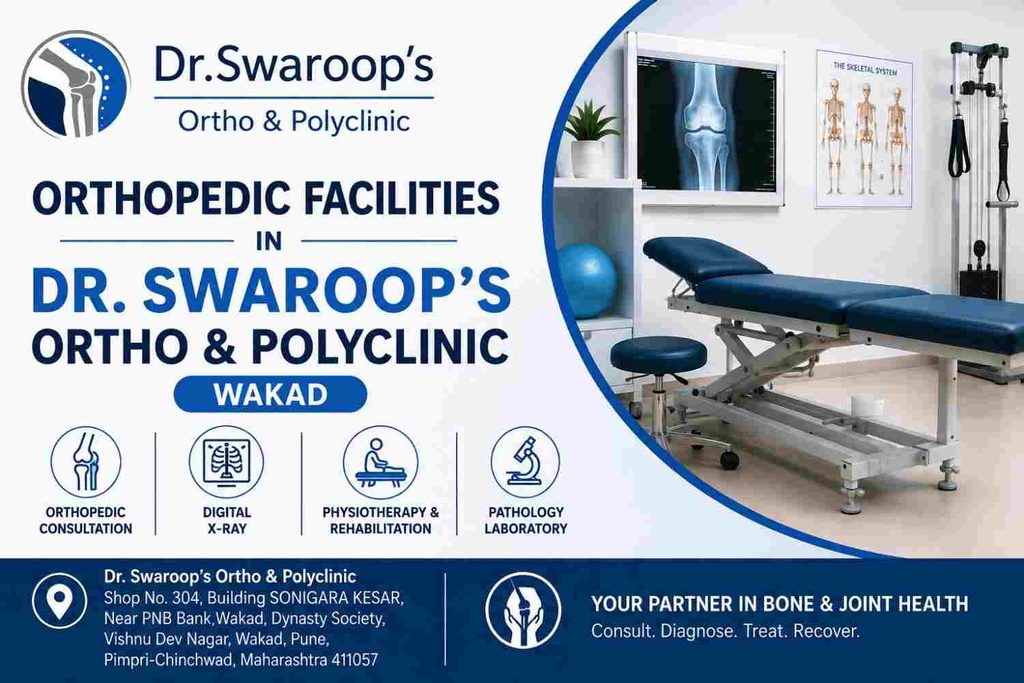
Dr. Swaroop’s Ortho & Polyclinic offers comprehensive orthopedic facilities in Pune, including orthopedic consultation, joint replacement, digital X-ray, physiotherapy, rehabilitation, and pathology lab support. The clinic provides personalized care for bone, joint, muscle, and sports-related conditions.
When you experience persistent knee pain, a sports injury, a fracture, back pain, or difficulty moving a joint, choosing the right orthopedic facility can make the treatment journey more convenient. Orthopedic care may involve more than a doctor’s consultation. Depending on the condition, patients may need physical examination, diagnostic imaging, physiotherapy, laboratory investigations, treatment, and follow-up care.
Dr. Swaroop Solunke, an experienced orthopedic surgeon in Pune, provides orthopedic care at Dr. Swaroop’s Ortho & Polyclinic in Wakad. The clinic offers orthopedic consultation along with supporting facilities such as digital X-ray, physiotherapy, and pathology laboratory services. These facilities can help patients access different aspects of orthopedic evaluation and rehabilitation in one setting.
Patients searching for the best orthopedic surgeon in Pune should consider factors such as the doctor’s experience, range of orthopedic services, diagnostic support, treatment options, and approach to patient care. Every orthopedic condition is different, so the appropriate treatment depends on the patient’s symptoms, examination, diagnosis, and overall health.
What Does an Orthopedic Clinic Provide?
Orthopedics focuses on the diagnosis and treatment of conditions affecting the bones, joints, muscles, ligaments, tendons, and other parts of the musculoskeletal system. People commonly visit an orthopedic doctor for:
- Knee pain and arthritis
- Shoulder pain and stiffness
- Back and neck pain
- Fractures
- Sports injuries
- Ligament and tendon injuries
- Hip problems
- Joint stiffness
- Bone-related conditions
- Movement difficulties
- Pediatric orthopedic concerns
The first step is generally an orthopedic consultation. The doctor reviews the patient’s symptoms and medical history and performs a physical examination. Depending on the findings, imaging, blood tests, physiotherapy, medication, injections, or surgical treatment may be recommended. At Dr. Swaroop’s Ortho & Polyclinic, patients can receive orthopedic evaluation and treatment for a range of bone, joint, and musculoskeletal conditions.
1. Orthopedic Consultation and Evaluation
An orthopedic consultation is usually the starting point when a patient has ongoing pain, swelling, stiffness, restricted movement, or an injury. During the consultation, an orthopedic specialist may ask about:
- When the symptoms started
- Previous injuries
- Existing medical conditions
- Previous surgeries
- Current medications
- Activities that increase the pain
- Changes in movement or mobility
- Previous treatments and their results
A physical examination may then be performed to assess joint movement, muscle strength, swelling, tenderness, alignment, and other clinical signs. If you are experiencing persistent bone or joint pain, consulting Dr. Swaroop Solunke, an experienced orthopedic surgeon in Pune, can help you understand the possible cause of your symptoms and available treatment options. Not every orthopedic problem requires surgery. Many conditions can initially be managed through conservative treatment, physiotherapy, medication, exercises, activity modification, or other non-surgical approaches.
2. Digital X-Ray Facility
- X-rays are commonly used in orthopedic care because they can provide useful information about bones and joints.
- Dr. Swaroop’s Ortho & Polyclinic provides a digital X-ray facility, which can support the evaluation of certain orthopedic conditions.
An X-ray may help doctors assess:
- Bone fractures
- Joint alignment
- Arthritis-related changes
- Bone deformities
- Certain causes of bone or joint pain
- Injuries following accidents or falls
- Post-operative bone and joint conditions
An X-ray is not required for every orthopedic complaint. The doctor decides whether imaging is appropriate based on the patient’s symptoms and physical examination. For example, a patient with a suspected fracture following an injury may require an X-ray, while some soft-tissue conditions may be assessed initially without an X-ray. Having diagnostic imaging available in an orthopedic setting can make the evaluation process more convenient for patients when an X-ray is clinically indicated.
3. Physiotherapy and Rehabilitation
Physiotherapy is an important component of orthopedic recovery. It can help patients improve movement, flexibility, strength, balance, and physical function. At Dr. Swaroop’s Ortho & Polyclinic, physiotherapy is available as part of the clinic’s orthopedic care.
Physiotherapy may be recommended for conditions such as:
- Back pain
- Neck pain
- Frozen shoulder
- Joint stiffness
- Sports injuries
- Muscle weakness
- Certain arthritis conditions
- Recovery following orthopedic surgery
- Movement limitations
A physiotherapy program is generally planned according to the patient’s condition and functional goals. It may include strengthening exercises, stretching, mobility exercises, manual techniques, and other clinically appropriate methods. For patients recovering after an orthopedic procedure, rehabilitation can be particularly important. A structured program may help restore movement and strength and support a gradual return to normal activities. However, physiotherapy is not the same for everyone. Exercises and treatment techniques should be selected according to the patient’s diagnosis, physical condition, and stage of recovery.
4. Pathology Laboratory Support
Some patients may require laboratory investigations as part of their orthopedic evaluation or before a particular treatment or procedure. Dr. Swaroop’s Ortho & Polyclinic also lists pathology laboratory services among its facilities.
- Blood tests may sometimes be recommended to help evaluate specific medical conditions, inflammation, infection, metabolic factors, or other health concerns that may be relevant to orthopedic treatment.
- Laboratory investigations can also be useful in selected patients before surgery, depending on the procedure and the patient’s overall health.
- It is important to understand that laboratory tests are not automatically necessary for every person with joint or bone pain. The orthopedic doctor determines which investigations are appropriate based on the patient’s individual circumstances.
5. Fracture and Trauma Care
- Fractures can occur due to falls, road accidents, sports injuries, workplace accidents, or other forms of trauma.
- Symptoms such as severe pain, swelling, bruising, difficulty bearing weight, restricted movement, or visible deformity may indicate the need for medical assessment.
- Dr. Swaroop’s Ortho & Polyclinic provides orthopedic treatment for fractures and trauma-related conditions.
- Treatment depends on the type and severity of the fracture. Some fractures can be managed using immobilization and regular follow-up, while others may require surgical fixation.
The orthopedic surgeon considers several factors before selecting treatment, including:
- Location of the fracture
- Type of fracture
- Degree of displacement
- Patient’s age
- Bone quality
- Associated injuries
- General health
- Functional requirements
Early assessment can help determine the appropriate treatment and reduce the risk of complications associated with improperly managed fractures.
6. Knee and Joint Care
Knee and joint pain are among the common reasons people seek orthopedic consultation. Conditions such as osteoarthritis can gradually affect mobility and make everyday activities more difficult. Patients may experience pain while walking, climbing stairs, standing for long periods, or getting up from a chair. Treatment depends on the severity of the condition and may include:
- Exercise and physiotherapy
- Activity modification
- Weight management where appropriate
- Medication
- Injections in selected cases
- Surgical treatment when necessary
An orthopedic specialist can assess the symptoms, examine the affected joint, and recommend appropriate investigations when needed. For patients searching for the best orthopedic surgeon in Pune, it is important to look for an orthopedic specialist who evaluates the individual condition rather than recommending the same treatment for every patient.
7. Joint Replacement Services
Some patients with advanced joint damage may eventually require joint replacement surgery.Joint replacement may be considered when severe joint damage causes persistent pain and significant difficulty with daily activities, particularly when appropriate non-surgical treatments have not provided sufficient relief. Dr. Swaroop’s Ortho & Polyclinic provides joint replacement services, including knee Replacement , hip Replacement , and shoulder replacement procedures.
Before recommending joint replacement, an orthopedic surgeon generally evaluates:
- Severity of joint damage
- Pain and stiffness
- Mobility
- Impact on daily activities
- Previous treatments
- General health
- Imaging findings
- Patient expectations
Joint replacement is a significant treatment decision and should be discussed carefully with an orthopedic specialist. The aim is not simply to replace a damaged joint but to improve pain, mobility, and quality of life when surgery is medically appropriate.
8. Sports Injury Treatment
Sports and physical activities can sometimes result in injuries involving muscles, tendons, ligaments, cartilage, or joints. Common sports-related injuries include:
- Ligament injuries
- ACL injuries
- Meniscus injuries
- Shoulder injuries
- Tendon injuries
- Muscle strains
- Joint sprains
Dr. Swaroop’s Ortho & Polyclinic provides orthopedic care for sports injuries and arthroscopic procedures where appropriate. Treatment depends on the nature and severity of the injury. Some injuries can improve with rest, rehabilitation, physiotherapy, and gradual return to activity, while certain significant injuries may require surgical treatment. A proper diagnosis is therefore important before returning to sports or starting an intensive exercise program.
9. Arthroscopy Services
Arthroscopy is a minimally invasive surgical technique used to examine and, in selected cases, treat problems inside a joint. It may be used for certain knee and shoulder conditions and can be considered for selected sports injuries. The procedure involves using a small camera inserted into the joint through a small incision. Depending on the condition, the surgeon may use additional instruments to perform the required treatment. Arthroscopy is not appropriate for every joint problem. An orthopedic surgeon determines whether it is suitable after considering the patient’s symptoms, examination, imaging, diagnosis, and previous treatment.
10. Back and Neck Care
Back and neck pain can have many possible causes, ranging from muscular strain and posture-related problems to degenerative conditions and disc-related disorders. An orthopedic evaluation can help determine the possible source of musculoskeletal pain and whether additional investigation is necessary.
Treatment may include:
- Activity modification
- Medication when appropriate
- Physiotherapy
- Strengthening exercises
- Posture correction
- Other conservative treatments
Patients experiencing severe pain, significant weakness, numbness, difficulty walking, or other concerning symptoms should seek appropriate medical evaluation rather than attempting to manage the problem independently.
11. Pediatric Orthopedic Care
Children can develop orthopedic problems involving their bones, joints, muscles, posture, gait, or physical development. Dr. Swaroop’s Ortho & Polyclinic also provides pediatric orthopedic care. Parents may consider an orthopedic evaluation if their child has:
- Persistent bone or joint pain
- Difficulty walking
- Abnormal gait
- Repeated injuries
- Persistent swelling
- Problems following an injury
- Concerns regarding limb or joint development
Children are still growing, so orthopedic assessment may differ from that of adults. Early evaluation can help determine whether a condition requires monitoring, physiotherapy, further investigation, or treatment.
12. Osteoporosis and Bone Health
Bone health becomes increasingly important as people age. Osteoporosis can reduce bone strength and increase the risk of fractures. Orthopedic care can be part of managing patients with bone-health concerns, particularly those who have experienced fractures or have risk factors associated with reduced bone density.
Depending on the patient’s circumstances, an orthopedic doctor may consider medical history, previous fractures, risk factors, laboratory investigations, and bone-density testing.
Maintaining appropriate physical activity, strength exercises, balanced nutrition, and medical management when required can contribute to maintaining healthy bones.
Why Orthopedic Facilities Matter
Orthopedic treatment is often a process rather than a single appointment. For example, a patient may first require an orthopedic consultation. The doctor may then recommend an X-ray or other investigation. Once the diagnosis is established, treatment may involve medication, physiotherapy, rehabilitation, or surgery. After a procedure, follow-up appointments and rehabilitation may also be required. Having access to orthopedic consultation, digital X-ray, physiotherapy, and pathology laboratory support can make different stages of care more convenient for patients. However, the availability of facilities should not replace the importance of an accurate diagnosis. Every investigation and treatment should be recommended based on the patient’s individual medical needs.
What Should You Bring to an Orthopedic Consultation?
Before visiting an orthopedic doctor, it can be useful to bring your previous medical information.
Consider carrying:
- Previous X-rays or scan reports
- Blood test reports
- Previous prescriptions
- Details of previous surgeries
- Current medication information
- Previous physiotherapy records
- Relevant injury or treatment history
You should also be prepared to explain when the symptoms began, what activities make them worse, and whether the problem has changed over time.
This information can help the orthopedic specialist understand your condition more clearly.
How to Choose an Orthopedic Clinic in Wakad
When selecting an orthopedic clinic in Wakad, patients should consider more than just location. Important factors may include:
- Experience of the orthopedic surgeon
- Range of orthopedic conditions treated
- Availability of diagnostic facilities
- Physiotherapy and rehabilitation support
- Treatment options
- Follow-up care
- Clear communication about treatment choices
- Appropriate referral when advanced investigations are required
Patients looking for an orthopedic doctor in Wakad can consider whether the clinic provides the facilities and treatment approach appropriate for their particular condition.
Why Consult Dr. Swaroop Solunke?
Dr. Swaroop Solunke provides orthopedic consultation and treatment for a range of bone, joint, and musculoskeletal conditions at his clinic in Wakad, Pune. The clinic combines orthopedic consultation with supporting facilities including digital X-ray, physiotherapy, and pathology laboratory services. This can provide patients with convenient access to different aspects of orthopedic care.
If you are searching for an experienced orthopedic specialist in Wakad or looking for the best orthopedic Doctor in Pune for your orthopedic concern, a consultation can help you understand the condition and determine the most appropriate treatment approach.
Conclusion
Good orthopedic care involves more than simply treating pain. Accurate diagnosis, appropriate investigations, personalized treatment, rehabilitation, and follow-up can all contribute to better recovery and improved mobility.
Dr. Swaroop’s Ortho & Polyclinic in Wakad provides orthopedic consultation along with facilities such as digital X-ray, physiotherapy, and pathology laboratory support. The clinic also provides care for fractures, joint problems, arthritis, sports injuries, back and neck conditions, pediatric orthopedic concerns, osteoporosis, and joint replacement needs.
If you have persistent bone or joint pain, difficulty moving, or an injury that is affecting your daily activities, consulting an orthopedic specialist can help identify the underlying problem and guide you toward an appropriate treatment plan.
The right orthopedic treatment depends on the individual patient. A thorough consultation with an experienced orthopedic surgeon can help you understand your condition, available treatment options, and the steps that may support a safe return to comfortable movement.
Dr. Swaroop Solunke
- Fellowship in Arthroplasty (Germany)- Bruderkrankenhaus St. Josef Paderborn, Germany.
- Fellowship in Primary and Revision Hip Replacement – Dr. Luigi Zagra IRCCS Instituto Orthopedia Galeazzi, Milan, Italy.
- Fellowship in Arthroplasty (Germany)- Bruderkrankenhaus St. Josef Paderborn, Germany.
- Fellowship in Robotic Knee Replacement – The Stone Research Foundation, San Francisco, California, USA.
- MS - Orthopaedics (Gold Medalist) – MGM Medical College and Hospital.
- MBBS – Dr. DY Patil University, Navi Mumbai.
- Member of Indian Medical Association (IMA)