
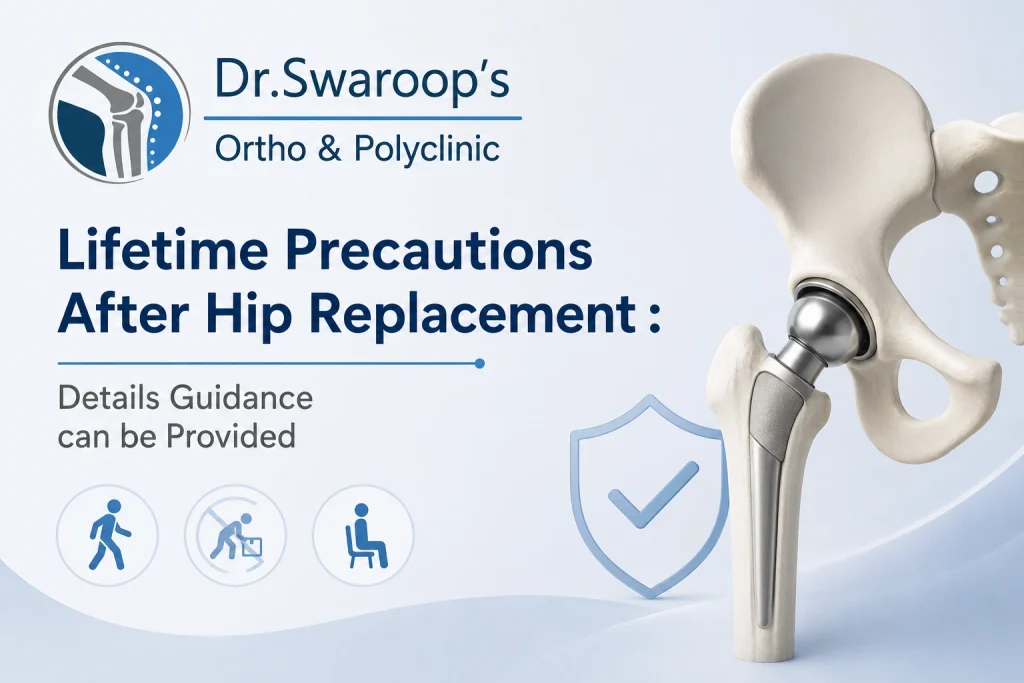
Hip replacement surgery is a life-changing procedure that helps patients get relief from chronic hip pain and regain mobility. It is commonly recommended for conditions like osteoarthritis, rheumatoid arthritis, hip fractures, or severe joint damage.
Although the surgery is highly successful and modern implants are designed to last for many years, the long-term success of a hip replacement depends heavily on how well the patient follows precautions throughout life.
This blog explains the most important lifetime precautions after hip replacement to ensure a safe, active, and pain-free life
What Happens After Hip Replacement Surgery?
In hip replacement surgery, the damaged hip joint is replaced with an artificial implant made of metal, ceramic, or plastic components. This new joint allows smooth movement and reduces pain.
However, unlike a natural joint, an artificial hip has limitations. It cannot fully withstand extreme pressure, improper movements, or repeated high-impact stress. That is why lifelong care is essential.
Why Lifetime Precautions Are Important
Even after complete recovery, the artificial hip remains vulnerable to wear and tear. Without proper care, patients may face complications such as:
- Implant loosening
- Hip dislocation
- Early wear of prosthetic components
- Reduced mobility
- Need for revision surgery
Following proper precautions helps:
- Extend implant life
- Maintain pain-free movement
- Reduce risk of complications
- Improve quality of life
Avoid High-Impact Activities
One of the most important rules after hip replacement is to avoid high-impact activities permanently.
Activities to avoid:
- Running or jogging
- Jumping exercises
- Contact sports (football, basketball, etc.)
- Heavy weightlifting
- High-impact aerobics
Why?
High-impact stress can damage the implant and shorten its lifespan.
Safe alternatives:
- Walking
- Swimming
- Cycling
- Light yoga (as advised by doctor)
Do Not Cross Your Legs
Crossing legs may seem harmless, but it can increase the risk of hip dislocation, especially if done frequently.
Avoid:
- Sitting cross-legged
- Twisting legs inward or outward
- Sudden bending movements
Instead:
- Keep legs slightly apart while sitting
- Maintain neutral hip position
Be Careful While Sitting
Improper sitting posture can put unnecessary pressure on the hip joint.
Guidelines:
- Use chairs with proper height
- Avoid very low sofas or stools
- Keep knees lower than hips if possible
- Sit with back support
This helps maintain proper alignment and reduces strain.
Sleeping Precautions
Sleeping posture plays an important role in protecting the hip joint.
Recommended:
- Sleep on your back during early recovery
- Place a pillow between legs if sleeping on side
- Keep legs slightly apart
Avoid:
- Sleeping on the operated side (initial months)
- Crossing legs during sleep
Maintain a Healthy Body Weight
Excess body weight increases stress on the hip implant and can reduce its lifespan.
Risks of overweight:
- Faster wear of implant
- Increased pain
- Reduced mobility
Healthy habits:
- Balanced diet
- Regular walking
- Avoid junk food and sugary drinks
Exercise Regularly (But Safely)
Exercise is important to strengthen muscles around the hip joint.
Recommended activities:
- Walking daily
- Swimming
- Stationary cycling
- Physiotherapy exercises
Avoid:
- Sudden twisting movements
- Heavy lifting
- Deep squats
Regular movement keeps the joint flexible and stable.
Prevent Falls
Falls are one of the biggest risks after hip replacement surgery.
Prevention tips:
- Keep floors dry and clean
- Remove loose rugs
- Install grab bars in bathrooms
- Use non-slip footwear
- Ensure good lighting at home
Even a minor fall can damage the implant.
Stair Climbing Technique
Proper stair use is very important for safety.
Rule to remember:
- “Good leg goes up first, operated leg goes down first”
Tips:
- Hold handrails
- Take one step at a time
- Avoid rushing
Avoid Heavy Lifting
Heavy lifting increases pressure on the hip joint.
Avoid:
- Carrying heavy bags
- Lifting furniture
- Sudden weight-bearing movements
If necessary, always bend knees and maintain correct posture.
Regular Follow-Ups Are Essential
Even if you feel completely fine, follow-ups with your orthopedic doctor are necessary.
Benefits:
- Early detection of implant issues
- Monitoring bone health
- Ensuring proper alignment
Suggested schedule:
- 6 weeks after surgery
- 3 months
- 6 months
- Once every year
Watch for Warning Signs
Contact your doctor immediately if you notice:
- Persistent hip pain
- Swelling or redness
- Difficulty walking
- Clicking sound in hip
- Sudden instability
Early diagnosis prevents serious complications.
Infection Prevention
Although rare, infection can affect the hip implant.
Precautions:
- Maintain good hygiene
- Treat dental infections quickly
- Inform doctors before procedures
- Take antibiotics if prescribed
Travel Precautions
Travel is safe after recovery, but caution is needed.
Tips:
- Take breaks during long journeys
- Walk every 1–2 hours
- Use support while getting in/out of vehicles
- Avoid sitting for long uninterrupted periods
Healthy Lifestyle for Long-Term Success
A healthy lifestyle supports long-lasting hip health.
Key habits:
- Regular low-impact exercise
- Balanced nutrition
- Adequate calcium and vitamin D
- Avoid smoking and alcohol
- Maintain ideal body weight
Conclusion
Hip replacement surgery can dramatically improve quality of life, but long-term success depends on following the right precautions. By avoiding high-impact activities, maintaining proper posture, preventing falls, and staying active safely, patients can enjoy a pain-free and independent life for many years after surgery.
Lifelong care is not about restriction—it is about protecting your new joint so it can serve you for decades.

Dr. Swaroop Solunke
- Fellowship in Arthroplasty (Germany)- Bruderkrankenhaus St. Josef Paderborn, Germany.
- Fellowship in Primary and Revision Hip Replacement – Dr. Luigi Zagra IRCCS Instituto Orthopedia Galeazzi, Milan, Italy.
- Fellowship in Arthroplasty (Germany)- Bruderkrankenhaus St. Josef Paderborn, Germany.
- Fellowship in Robotic Knee Replacement – The Stone Research Foundation, San Francisco, California, USA.
- MS - Orthopaedics (Gold Medalist) – MGM Medical College and Hospital.
- MBBS – Dr. DY Patil University, Navi Mumbai.
- Member of Indian Medical Association (IMA)